Portugal
  Spain
Spain  France
  United Kingdom
  Germany
  Italy
Italy  United States
DRIEETS Île-de-France certifies a project for the French Tech Visa when it introduces a new or significantly improved product, service, process, business model, marketing method, organisational method, or social innovation. That definition, not a fixed list of approved sectors, is the real test. In practice, the themes that pass most reliably are deeptech, fintech aimed at emerging markets, greentech and the circular economy, health technology, AI with genuine technical substance, and social or business-model innovation. The themes that get rejected almost on sight are HoReCa (cafés, restaurants, hotels), franchises, real estate plays dressed up as proptech, and e-commerce with no technical differentiation. The sector label matters far less than whether you can demonstrate concretely what is new. A "fintech" with no novel mechanism fails; a logistics project with a genuinely original process passes.
The official innovation definition DRIEETS works from
The certifying body for the innovative-project route is DRIEETS Île-de-France (Direction régionale et interdépartementale de l'économie, de l'emploi, du travail et des solidarités). It evaluates one thing: is the project genuinely innovative? Its working definition is broad and follows the standard economic understanding of innovation, a new or significantly improved offering along any of these axes:
- Product or service: a technology, tool, or service that did not exist before or is materially better than what is available
- Process: a new way of producing, delivering, or operating
- Business model: a new way of capturing value (subscription where the market sold licences, marketplace where the market sold direct, and so on)
- Marketing or organisational method: a new go-to-market or internal structure
- Social innovation: a new answer to a social or environmental need
This breadth is the part most applicants misread. They assume "innovative" means "deeptech with a patent." It does not. A business-model or organisational innovation can qualify on its own, provided the novelty is specific and defensible. What DRIEETS rejects is not the absence of hardware: it is the absence of any identifiable novelty at all.
The legal basis, correctly stated. The innovative-project route is the second sub-route of the consolidated talent - porteur de projet card: Article L.421-16, 2° CESEDA ("justifie d'un projet économique innovant, reconnu par un organisme public"), with the certification and resources conditions in R.421-34-1 and R.421-34-2. Many guides, and the DRIEETS application form itself, still cite the old L.421-17, which was repealed by the 2024 immigration law (loi n° 2024-42, art. 30). The innovation test itself is unchanged; if a source presents L.421-17 as live, treat its list of "approved themes" as potentially dated too.
Themes that pass well in 2026
These clusters carry the strongest signal because they map cleanly onto the innovation definition and onto France's stated industrial priorities (the France 2030 plan, the French Tech ecosystem, decarbonisation and sovereignty agendas).
| Theme | Why it reads as innovative | What still has to be proven |
|---|---|---|
| Deeptech (AI infrastructure, robotics, quantum, advanced materials, biotech) | Technical novelty is usually self-evident | Real technical depth, not a wrapper; a credible team |
| Fintech for emerging markets | New mechanism or new under-served segment | A specific product, not "a neobank for X" with no differentiator |
| Greentech & circular economy | New process, material, or model reducing impact | Measurable environmental mechanism, not a green label |
| Health technology | New diagnostic, device, care pathway, or platform | Clinical or operational substance; regulatory awareness |
| AI with real substance | New application, model, or workflow | A genuine technical or data moat: see the caution below |
| Social & business-model innovation | New answer to a social need or new value-capture model | Concrete, named novelty, not "doing X but better" |
The common thread is specificity. A deeptech project that can describe its technical approach in two paragraphs passes; a "deeptech AI platform" that cannot passes nothing. DRIEETS evaluates the substance of the project, not the size of the funding round or the founder's revenue history, which is exactly why the route requires no minimum investment, only SMIC-level personal funds (€22,404.20 per year after the 1 June 2026 revalorization). For the full breakdown of why there is no capital gate, see France startup visa with no investment.

AI projects: passable, but the bar moved
AI deserves its own line because it is now the most common, and most diluted, claim in the dossier pile. "We use AI" is no longer an innovation statement; it is table stakes. DRIEETS has seen enough generic "AI-powered" wrappers that a vague AI claim now reads as a weakness, not a strength. What still passes:
- A novel model, training approach, or data asset you actually own or build
- A specific, defensible application of existing models to a problem nobody has solved this way
- A workflow or product where the AI is the mechanism, not a marketing adjective
What fails: "ChatGPT for [industry]" with no proprietary layer, or a thin interface over a third-party API presented as the innovation. If your AI claim can be copied by anyone with the same API key over a weekend, it is not your moat, and DRIEETS will read it that way.
Not sure whether your project reads as innovative to DRIEETS? Relovisa's France Talent specialists pressure-test project descriptions against the certification criteria before you submit.
Explore the France Talent service →
Themes that get rejected
These fail the innovation test by definition, regardless of how the dossier is dressed. Reframing rarely rescues them, because the underlying activity carries no novelty.
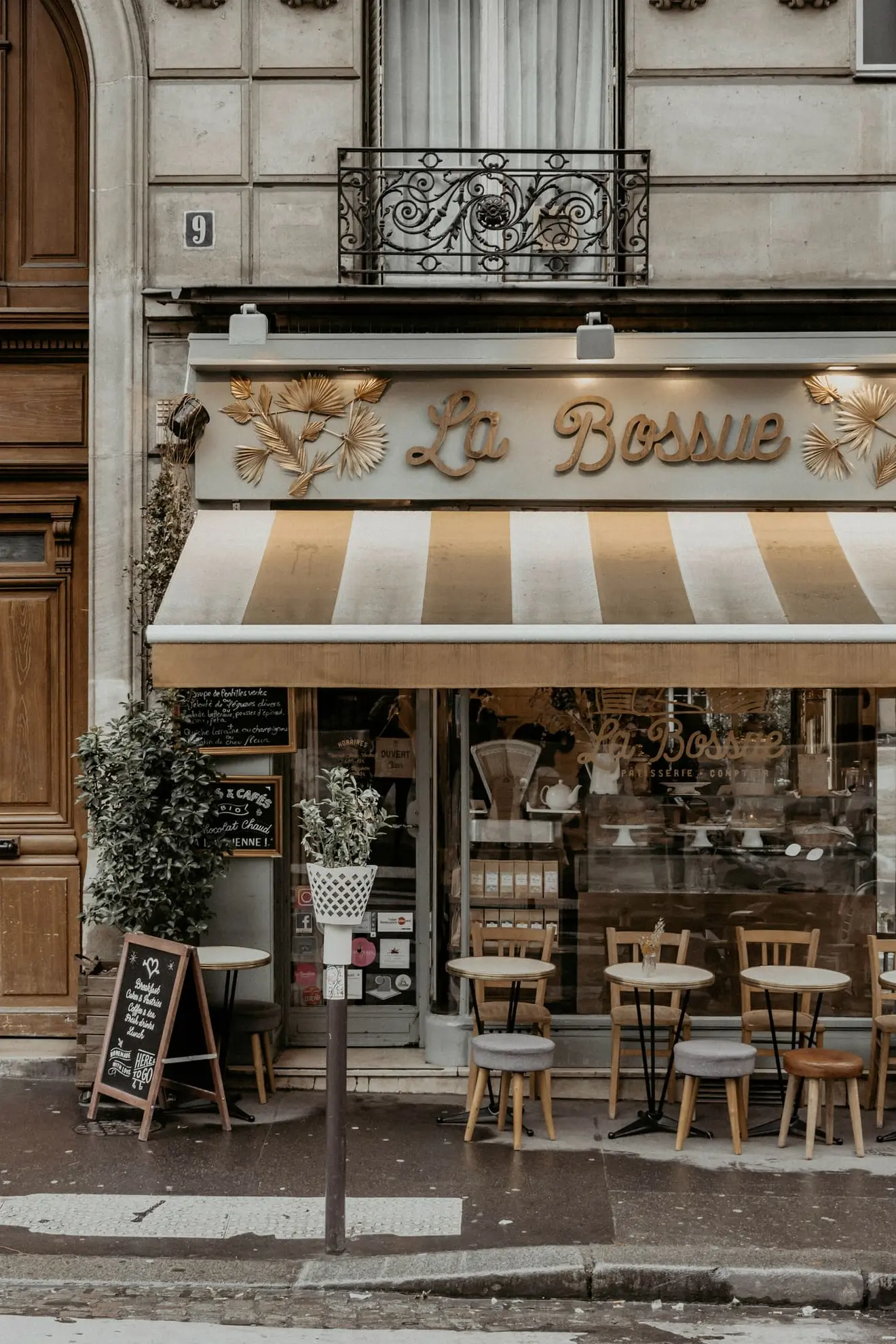
- HoReCa: cafés, restaurants, bars, hotels. A new venue is a new business, not a new product, process, or model. Even a "concept" restaurant is an operational variation, not innovation.
- Franchises: opening a branch of an existing brand is the opposite of innovation; the value of a franchise is that it is not new.
- Real estate dressed as proptech: a property-investment or rental-management business with a thin software veneer. DRIEETS sees through "proptech" labels applied to ordinary real estate plays.
- E-commerce with no technical differentiation: reselling products through an online store is a distribution business, not an innovative project. A new logistics process or a genuinely new model could qualify; a Shopify storefront does not.
- Generic "consulting" or "market entry": services that exist everywhere, described without any specific novelty.
- Vague AI claims: covered above; the most frequent 2026 rejection trigger.
The pattern across all of these: the project describes a business, but not a new one. The rejection patterns that disqualify a dossier at the certification stage are covered in depth in French Tech Visa rejection reasons.
How to frame a borderline project
Many real projects sit on the edge: the underlying business is legitimate and may even be genuinely novel, but the framing hides it. The fix is almost never to inflate claims; it is to surface the specific novelty that is already there.
- Name the novelty in one sentence. If you cannot complete "What is new here is ___" with something specific and defensible, the dossier is not ready: find the real innovation or reconsider the route.
- Lead with the mechanism, not the market. "A platform for SMEs" describes a customer. "A platform that automates [specific process] in a way that did not exist" describes an innovation.
- Show technical or model specificity. Even a few concrete details (the architecture, the data, the process step you reinvented) move a dossier from "vague" to "credible."
- Drop the buzzwords that signal weakness. "Disruptive," "revolutionary," and undefined "AI-powered" raise scrutiny rather than lower it. DRIEETS reads substance, not adjectives.
The detailed walkthrough of what the certifier evaluates and how to structure the project-description section lives in DRIEETS dossier checklist 2026.
A note on crypto and Web3
Crypto and Web3 projects are not banned, and a genuinely novel protocol, infrastructure layer, or application can be innovative in the ordinary sense. But this is the one cluster where the innovation test is the easy part. France applies a stricter legal and compliance regime to digital-asset activity (PSAN/MiCA registration, AML obligations), and a dossier that ignores that regulatory dimension reads as naïve. If you pursue this theme, scope the business plan carefully: address the licensing and compliance path explicitly, and do not present crypto as an easy, fast-track innovation theme. Treated seriously it can pass; treated as a buzzword it fails on both the innovation and the credibility axes.
Who this matters for
This guidance is for founders deciding whether their idea fits the route at all before investing in a dossier. The honest answer is that the route is theme-agnostic in principle and theme-sensitive in practice: any sector can host an innovative project, but some sectors make the novelty obvious and others make it nearly impossible to prove. If your project lives in deeptech, fintech, greentech, health, substantive AI, or social and business-model innovation, you are starting from a strong position. If it lives in hospitality, franchising, conventional real estate, or undifferentiated e-commerce, no amount of framing will manufacture innovation that is not there.
Co-founder teams strengthen a strong theme further, because complementary expertise makes the project more credible, provided each founder holds a genuine executive role. Note that the resources condition (R.421-34-2) is per applicant: each co-founder must independently show funds at the annual gross SMIC (€22,404.20). That mechanic is covered in Co-founder teams for the French Tech Visa. And the overall structure of the route (hub, spokes, and how the pieces connect) is mapped in French Tech Visa for Founders 2026.
Book a consultation on France Talent →
Sources
- lafrenchtech.gouv.fr, French Tech Visa for Founders: innovation criteria and DRIEETS certification process. Verified June 2026.
- demarches-simplifiees.fr, DRIEETS Île-de-France application portal for the French Tech Visa for Founders, including the innovative-project definition. Verified June 2026.
- CESEDA Article L.421-16, 2°, "talent - porteur de projet" card, innovative-project sub-route ("projet économique innovant, reconnu par un organisme public"); procedural conditions in R.421-34-1 and R.421-34-2. Replaces the former L.421-17, repealed by loi n° 2024-42 du 26 janvier 2024 (art. 30). Légifrance. Verified June 2026.
- Service-public.fr, "Carte de séjour talent" entrepreneur routes: conditions and financial resources at annual gross SMIC level. service-public.gouv.fr/particuliers/vosdroits/F16922. Verified June 2026.
- Ministère du Travail, SMIC revalorization effective 1 June 2026: monthly gross €1,867.02, annual gross €22,404.20. travail-emploi.gouv.fr. Verified June 2026.
- Autorité des marchés financiers (AMF), PSAN registration regime for digital-asset service providers and the transition to MiCA. amf-france.org. Verified June 2026.